 Solutions for all joint sizes
 No wet Weather delays
 Non staining, Easy clean
The History of Paving & Development of Jointing
Since pre-history, stone paving has been used and developed as a durable solution for hard surfacing, other than the selection of the best types, sizes, and build-up of stone elements, next developments were in paving jointing technology. The earliest development were made not by the Romans, as often claimed, but much earlier by the Minoans, about 6,000 years ago, specifically it is believed, to ensure level surfaces for their pathways, roads, and hard standings, without trip hazards, and with ease of water run-off. Suitably filled & sealed joints ensured a smooth transition for the early wheeled and rolled traffic, etc., as well as water management so the requirements in this respect were not unlike they are today.
Cement Mortar Development
A huge technological step was made by the Minoan engineers’ development of a uniquely adaptable stone bedding and joint filling material using as a basic pozzolanic mortar.
The raw materials for this were widely available to them because of the island’s volcanic past, as this type of mortar and this paving jointing application was originally invented on what is now modern Crete. This is also seen as the first and original creation of the pozzolanic building materials now collectively known as cementitious materials - including concretes and any other cement mortars (‘Con-Crete’ – You see the connection!).
-

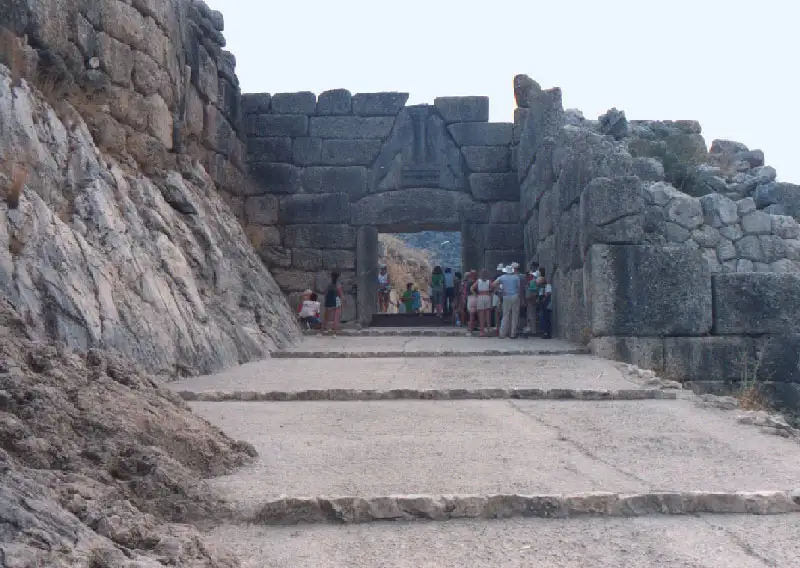
Minoan Roads in Crete
-

c3500 BCE-Sandstone and Basalt with Gypsum Clay jointing
-

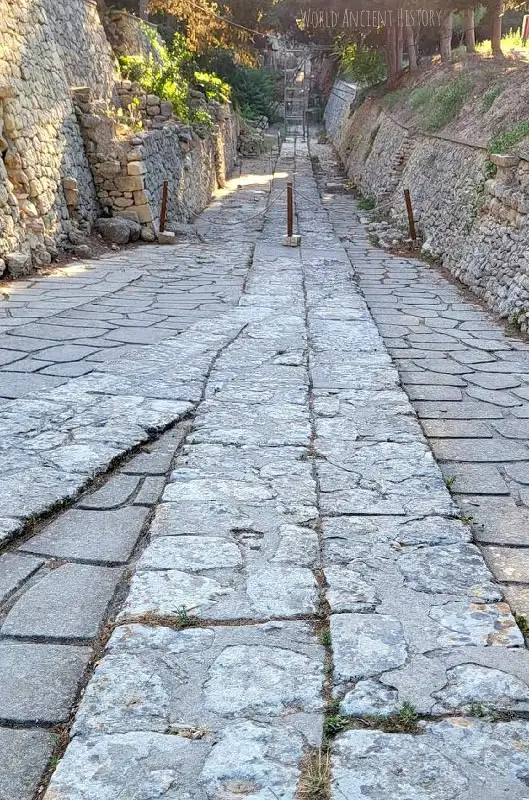
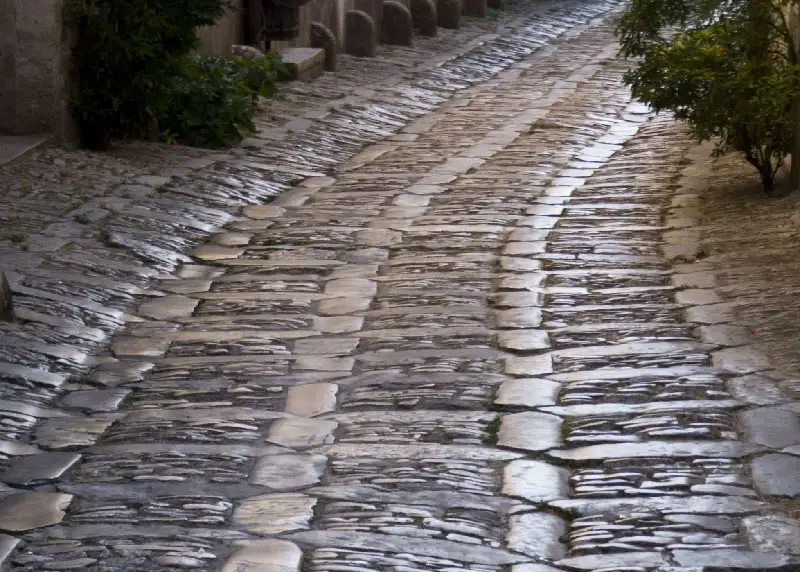
Roman Road - the Appian Way from Rome to Brindisi
-

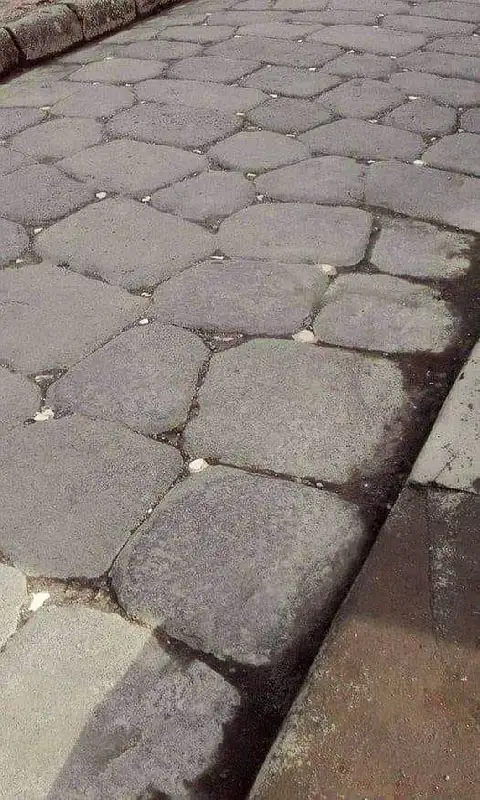
Roman Road in Pompei with small white stones for night visib
Since this time paving technology spread and developed, including with the types and sizes of stone used as well as the mortars used for bedding and jointing them. Different areas of use and the different exposure have also continually developed with exposures becoming more aggressive and severe, especially in terms of weathering in harsher climates like the UK. Today, paving can have far heavier loadings from vehicular traffic, plus more onerous chemical exposure from spillages, as well as from de-icing salts for example.
To counter this problem, at various times in history, different ‘bituminous’ (bitumen = from oil, pitch / tar = from wood or coal distillation) materials have been used for paving jointing, and historically this technique was developed and used to make the joints waterproof, and/or resistant to leaching and wash-out by water erosion.
Paving Jointing with Bitumen / Pitch / Tar Materials
 Bituminous bitumen and/or pitch- / tar-based materials (hot and cold applied) have notorially and traditionally was used for natural stone sett for highways and public areas. The paving joints were then minimum 100+mm deep, where there was far less thermal variation and therefore bituminous materials have more stability and will maintain watertightness. These deep joints were sometimes part-filled with stone chippings, then the interstices filled, and the joints topped off for minimum 100mm with the bituminous materials. Bituminous joints have proved extremely durable for the past 300+ years or so, and there are many areas of ‘pitch paving’ that still exist in some heritage areas, especially where this also has an important waterproofing function, such as over below ground culverts, vaults and other below ground structures.
However, in new construction and refurbishment works today, any waterproofing requirements can usually be achieved far quicker and easier by engineered waterproofing with modern materials. Therefore, bitumen jointing is generally used only for heritage and conservation reasons, and must only be done by specialists, otherwise this can be very messy and more trouble than it is worth these days when good alternative methods are available.
Paving Jointing Development in the UK
There is some argument about the first use paved surfaces in the UK, which are generally credited to the Romans from the first century AD, though recent archaeological work has discovered earlier iron-age paved roads which significantly predate the Romans arrival. Stone paved roads, with some form of binder/ filler in the joints would always have been far more efficient for wheeled traffic that is for sure, whenever the this began in these islands. However, the major expansion of paved roads across most of the UK, centarals began with the arrival and logistics requirements of the Roman Army, who embarked on around 300 years of road building programmes, using stone and early cement jointing.
Today, all around the UK & urban and indeed the rest of the modern world, cement-based (cementitious) materials are still the most widely used paving bedding and jointing materials. Nowadays, these usually include special cements and/or polymer modified cement mortars, with prebatched and prebagged materials used on many sites to reduce the potential for site batching errors. However, modern construction time and cost pressures, skills shortages, and as always in the UK, the very un-Mediterranean British Weather, all combine in serious disadvantages for cement bond jointing that we review in the website. These frequently wet and damp UK site conditions, plus time pressures on completion and opening dates, mean that different paving jointing technologies, can have distinct advantages and/or disadvantages, including limitations that are not always fully understood or as well-known as they should be. We will cover and expand on all of these in the following pages of this website.

Roman Road across Blackstone Edge Rishworth Moor, East of Manchester.
For more detailed information on paving jointing, including the requirements for successful application and installation, as well as the performance in service; the available jointing technologies and their limitations and advantages; plus how to select the best product for your project - Please refer to the 'Paving Jointing' pages of this website.
Additionally, for more information and guidance on the cleaning, refurbishment and refreshment of paved areas, and specifically on the special requirements, dangers and how to successfully repoint different types of paving in different types of areas - Please refer to the 'Paving Repointing' pages of this website.'
For more advice or assistance with your specific paving project, please call 01257 266696 for FREE Expert Advice, or email: sales@nccstreetscape.co.uk
What makes NCC Streetscape Different?


We provide the best paving jointing solutions for all types of paving in all types of areas, and joint sizes. This includes optimum solutions for jointing and repointing works in all domestic, commercial, and public paved areas.
We are the Exclusive UK & ROI Agents & Suppliers of GftK GmbH., the global technology leaders in paving jointing, with unique products that allow quick and easy application, even in wet weather, then provide high performance and extended durability for a long service life.
We provide FREE Expert Technical Advice to select the right product on every project, with additional guidance to prepare and successfully complete the job, including our renowned training and site support service.
We have a reputation for quality, reliability, and service, from professional paving and landscaping contractors, specifiers and authorities, as well as our and DIY customers.