 Solutions for all joint sizes
 No wet Weather delays
 Non staining, Easy clean
Paving Surface Porosity (incl. Simple Testing)
How to Test Your Paving Permeability / Porosity
A simple water droplet test to confirm if you really need to seal your paving………?
This simple test is what our technical specialists recommend to quickly check and assess the porosity, or not, of paving surfaces when on-site, plus this is also a very good way to find out how easily water borne salts and stains will behave on your paving; it can also be assumed that oil-based stains will generally always be more penetrative - as an easy clue!
This is a simple surface permeability / porosity / absorbency test that is widely known as the Water Droplet Test. This was originally developed for use in the resin flooring industry, where it can be critically important for the resin primers to penetrate the concrete base slabs, or the resin floor will not have sufficient adhesion. In preparation for seriously expensive resin flooring works, this pre-testing and substrate evaluation is carried out very precisely using a pipette and strictly measured, timed, and controlled as shown in the examples below. Whilst paving sealing is not in the same league of costs or detailing as resin flooring, a variation of this test can easily be made on site to confirm the porosity or otherwise of the paving elements before sealing them. The key information gained will be a good visual understanding of how well any water and/or water borne de-icing salts or stains, including the ubiquitous red wine, will also be able to penetrate and damage or disfigure your concrete blocks or natural stone. If water does penetrate easily and continue to be absorbed into the surface, then you would be well advised to consider the use of a paving sealing solution to protect your investment and maintain its good appearance!
Water Droplet Test Procedure:
This involves the application of single droplets of water onto the concrete / stone paving surface, whilst closely observing the behaviour and any movement of the droplet, whilst timing and monitoring the rate of absorbency into the substrate. This gives a good indication of the surface density and permeability, and if a paving sealer might be a good idea.


To correctly carry out the Water Droplet Testing, use a pipette or suitable dispenser and make groups of approximately 6 water droplets in different elements and areas of the paving, including on any areas that are discernibly different in appearance, texture, or profile (to check consistency in results – or more importantly variations in permeability that are always possible and best found with water now, rather than later with oil or red wine etc.)
Place the droplets using a simple ‘dropper’, syringe, or pipette (available from any chemist) type dispenser to suit, positioning them together within an area approximately 10cm x 10cm, be sure to always test at least the centre and the perimeter areas of your paving elements with different groups of droplets if necessary, and according to their size.
Example of Droplet Test on Dense Paving Surfaces
(i.e. smooth, hard and almost ‘shiny’ surfaces)

Water Droplets: Pipette Application
Note - No immediate absorption!

Water Droplets: 5 Mins Later
Note - No absorption evident!
If these were the surfaces of your concrete or stone paving, then a surface sealer is probably not required as water cannot easily penetrate and therefore the paving will be resistant too frost damage, plus as water cannot penetrate then it is most unlikely that the surfaces will be stained either.
Example of Droplet Test on Open-textured Paving Surfaces
(i.e. – surfaces that are ‘dull’ and not shiny in any areas, such as those that have been riven, sawn, or which have already been mechanically prepared e.g. by blastcleaning or grinding etc.).

Water Droplets: Pipette Application
Note – Absorption is immediately visibly evident

Water Droplets: 5 Mins Later
Note: - Absorption continues & diameter of penetration increases
These clearly porous concrete or natural stone paving elements are therefore highly likely to benefit from, or perhaps even need the application of a suitable sealer to prevent water penetration and future damage and / or being disfigured by unsightly and unhygienic staining.
So - A simple test and a good way to help you or your customers decide what makes sense for your paving projects. We hope that you find this additional information and advice helpful for your project.
For any more information on Paving Sealing for your specific project, please call 01257 266 696 for our FREE expert advice and assistance.
Case Studies
Sandstone Patio & Pathways
After the recent poor summers and long, wet winters, some of the areas had become.,...
View Case Study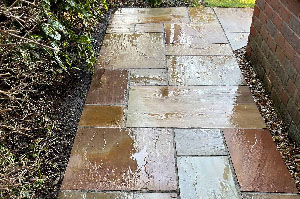
Flexible Block Paved Driveway
The homeowner had recently finished a thorough clean up of his patio and pathways, ready...
View Case Study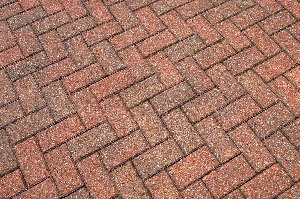
Natural Sandstone Patio and Pathways
This Buckinghamshire homeowner takes great pride in his natural sandstone patio and...
View Case Study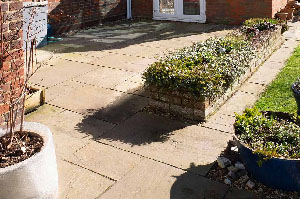
What makes NCC Streetscape Different?


We provide the best paving jointing solutions for all types of paving in all types of areas, and joint sizes. This includes optimum solutions for jointing and repointing works in all domestic, commercial, and public paved areas.
We are the Exclusive UK & ROI Agents & Suppliers of GftK GmbH., the global technology leaders in paving jointing, with unique products that allow quick and easy application, even in wet weather, then provide high performance and extended durability for a long service life.
We provide FREE Expert Technical Advice to select the right product on every project, with additional guidance to prepare and successfully complete the job, including our renowned training and site support service.
We have a reputation for quality, reliability, and service, from professional paving and landscaping contractors, specifiers and authorities, as well as our and DIY customers.