Best Grout for Porcelain Slabs: Epoxy vs Cement Compared
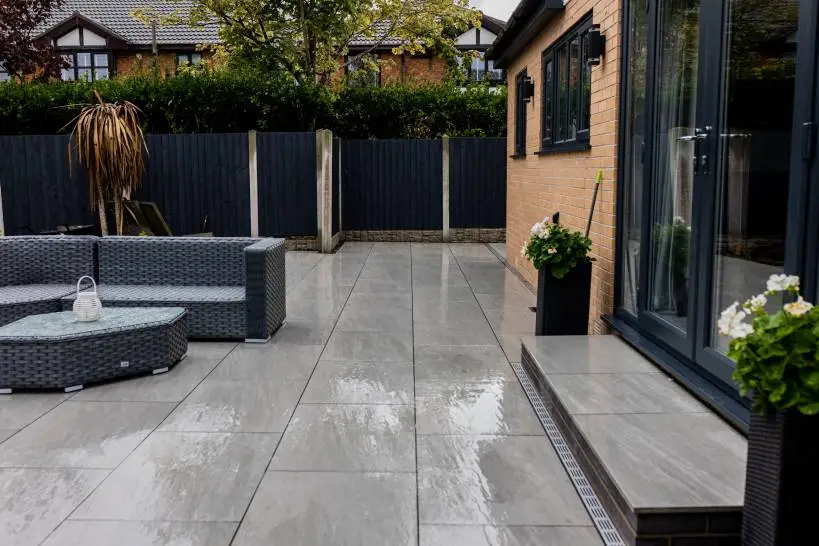
If you’re searching for the best grout for porcelain slabs, you want one without a long list of restrictions. Many grouts warn you not to use them in damp conditions, when rain is forecast, or if there’s residual water in the joints. Some make you wait at least 28 days after laying the slabs before grouting. Others demand a specific permeable or non-permeable base. All of that is far too limiting.
You also want a grout that doesn’t stain, and one that easily withstands jet-washing to keep your porcelain paving pristine. Above all, you want a joint that still looks sharp in five years — not one that cracks and lets weeds grow by next summer.
Porcelain is hard, dense and non-absorbent, so the type of grout you use really matters for a strong bond in the joints. In this easy guide, we compare the options so you can choose with confidence.
Why porcelain needs a special grout
External porcelain tiles are dense and barely absorb water. As a result, cement-based grouts and brush-in compounds struggle to bond to them. They often shrink, crack and lift in a short time.
So the grout you choose for your porcelain paving must bond to the sides of the joint without needing the slab to “soak it up”. It must also shrug off frost, rain and traffic — whether pedestrian or vehicular. For all these reasons, the best grout for porcelain slabs is a tenacious epoxy grout, rather than cement or brush-in compounds.
Types of porcelain grout, compared
1. Epoxy (wet-slurry) grout — the professional choice
The best 2-part epoxy grout mixes a 2nd-generation, non-staining epoxy resin with graded sand to form a free-flowing slurry. You simply pour it on and squeegee it into the joints. There, it self-compacts and bonds tightly to the smooth, dense edges of the porcelain. Because the bond doesn’t rely on surface absorption, it works brilliantly on these non-permeable slabs.
- Extremely durable — it won’t shrink, crack or wash out.
- Frost, de-icing salt and jet-wash resistant, with weed-free joints.
- Non-staining, fast to apply, and done mostly standing up rather than on your hands and knees.
- Higher upfront cost than cement or brush-ins — but a far longer service life.
This is increasingly what professionals use on quality external porcelain paving, and it’s widely regarded as the best grout for porcelain slabs. For narrow joints from 3mm, GftK vdw 815+ is the go-to. For wider joints from 5mm, or areas taking vehicles, use GftK vdw 850+. Both are made by GftK, the global leaders in paving jointing technology.
2. Brush-in jointing compound
You open the vacuum-sealed bag, pour the material onto the paving, and brush it into the joints while dry or slightly damp. Most then need compacting again with a pointing trowel, which is time-consuming and gives limited results. These compounds are cheap and DIY-friendly.
However, they need a very permeable base and aren’t resistant to jet-washing. So they don’t suit most porcelain patios, which need frequent cleaning to stay pristine. Over a fairly short time they also tend to crack, discolour, wash out or let weeds through. In short, they only suit smaller, lighter-use patios. (The one exception is GftK’s own Patio Grout and vdw 840+, which — unlike other brush-ins — can even be applied in wet weather.)
3. Cement-based pre-bagged slurry grout
These are easier-to-use, cement-based slurry mixes, and quality varies a lot by brand. They install quickly and can be reasonably durable on domestic patios — but only if applied in completely dry conditions with no residual water in the joints. Otherwise they often fail within a year or two.
Cleaning off cement grout afterwards is also a big job that needs special equipment, such as a wash-boy. So unless you’re experienced and equipped, it’s best avoided. If you do go ahead and then need to remove the dried “haze”, we can help — see our Paving Cleaners range. One warning: never use brick acid or anything similar on porcelain surfaces.
4. Twin-cartridge epoxy resin grout
These are applied from a 2-part cartridge with a strong sealant gun. They’re hard to extrude unless you warm them right up, and even then they can be messy. They suit small areas and quick repairs. For a few joints they’re handy. Across a larger patio, though, they’re slow, expensive and back-breaking — so they’re not ideal for bigger porcelain areas.
5. Cement-based brush-in mix (pre-bagged or site-batched)
Dry brushed-in sand and cement is the old traditional method, and it’s making a comeback, including in pre-bagged form. Usually, though, it’s the wrong choice. It’s quick to apply, but the hardened quality and performance in the joints varies wildly.
All cement-based grouts shrink. If the water-to-cement ratio is thrown off — by water in the joints, or too little or too much wetting — the material won’t cure correctly. It then cracks as it dries and leaves weak areas, especially at the surface. These cracks may not show straight away. It can take a few thermal cycles over several months — but the problem was set on day one.
This is why professionals who prefer cement (for its lower cost) usually choose slurry-type mortars instead, on larger areas where they control the conditions and equipment. With a dry mix pushed into the joints and wetted from above, the final strengths are unpredictable — not ideal for porcelain. It may look nice on the day, but check again a year later.
As with the slurry products, cement bonds poorly to dense, non-absorbent porcelain edges — something many people don’t realise. Efflorescence can also be a problem, and the grout soon fades or discolours. The biggest limitation, though, is timing and weather. The porcelain must be laid at least 28 days before grouting, and cement grout can only be applied in dry conditions, with a dry forecast and no water in the joints. Otherwise, shrinkage and cracking will follow.
Quick comparison
Here’s how the main porcelain jointing options compare — including how each handles the two things that catch people out most in the UK: wet weather and residual water in the joints.
| Type | Wet Weather / Wet Forecast | Residual Water in the Joints (from rain or cleaning work) | Durability | Key Advantages | Potential Risks / Issues |
|---|---|---|---|---|---|
| Brush-in compounds (vacuum-packed, air-drying, compound) | No (Except GftK Patio Grout / vdw 840+) | No (Except GftK Patio Grout / vdw 840+) | Low to Medium (not resistant to jet-washing) | Quick & Easy, No Special Equipment | Staining, No Jet-washing, Limited Resistance |
| Cement-based: Traditional Sand & Cement Pointing | No | No | Medium to High | Traditional Appearance & Low Cost Materials | Slow, High Skilled Labour Cost & Weather Sensitive |
| Cement-based: Wet-slurry Grout | No | No | Medium to High (risk of cracking) | Quick & Relatively Low Cost Materials | Pro-use Only, Weather Sensitive, Risks of Staining & Cracking |
| Cement-based: External Tile Grout | No | No | Medium | Unlimited Colours with Smooth Finish | Slow & Weather Sensitive |
| Cement-based: Dry Sand & Cement (prebagged) | No | No | Medium (risk of cracking) | Fast with Relatively Low Cost Materials | Very Weather Sensitive, Risks of Consistence, Cracking |
| Twin-cartridge Applied, 2-part Epoxy | No | No | High | Unlimited Colours with Smooth & Durable Finish | Slow & Weather Sensitive, Highest Material Cost |
| 2-part Epoxy (2nd-Gen.), Wet-slurry type, Non-staining (e.g. GftK vdw 815+ / 850+) | Yes – No Problem | Yes – No Problem | Very High | Fast & Clean, Non-Staining, Work in Wet, High Porcelain Bond & Durability | Relatively High Initial Material Cost |
So what is the best grout for porcelain slabs?
For a long-lasting, durable finish, the 2-part, non-staining (2nd-generation) wet-slurry epoxy grout is the clear winner. It’s the only option that combines quick, easy application with minimal site and weather limitations. It gives tough, high-performance joints that fully resist frost, weeds, staining and frequent jet-washing, for a long service life. The two products we recommend are:
- GftK vdw 815+ — for narrow joints (3mm+) on patios and terraces. Our everyday best-seller for porcelain.
- GftK vdw 850+ — for wider joints (5mm+), most other paving types, and areas from garden patios and domestic driveways to commercial and public spaces with heavy traffic.
You can also see the full range on our GftK Paving Joint Mortars page.
You can buy the best grout for porcelain slabs from here:
-
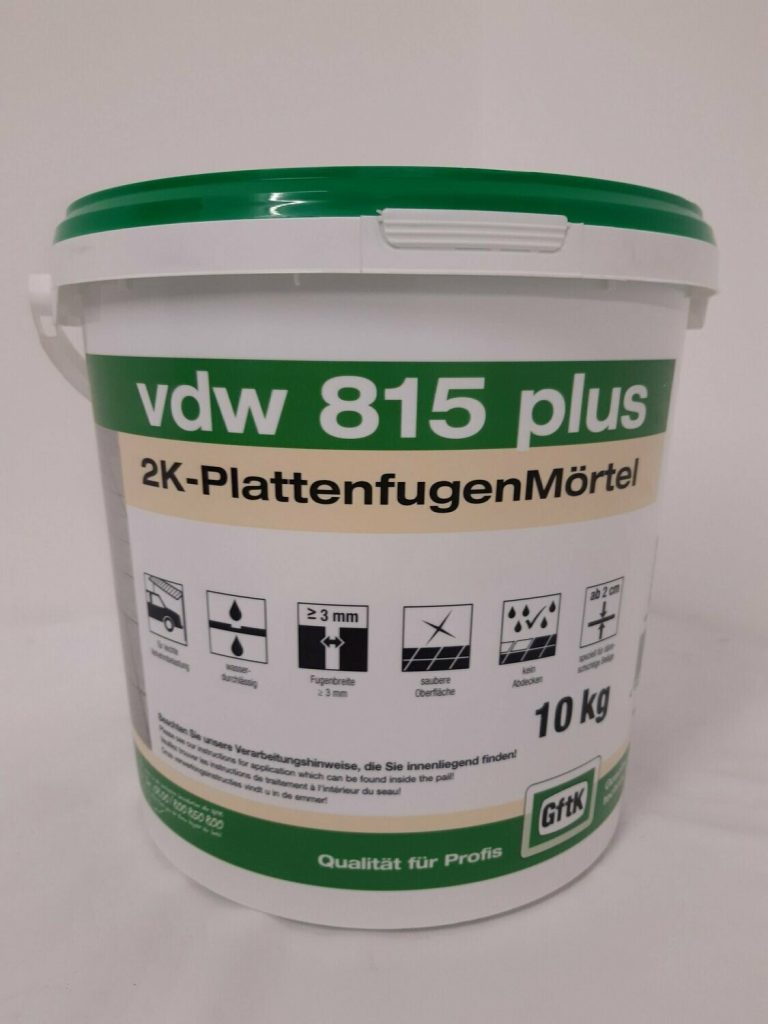
GftK vdw 815+ Grout for External Porcelain & Natural Stone Paving
Price range: £60.68 through £62.82 -
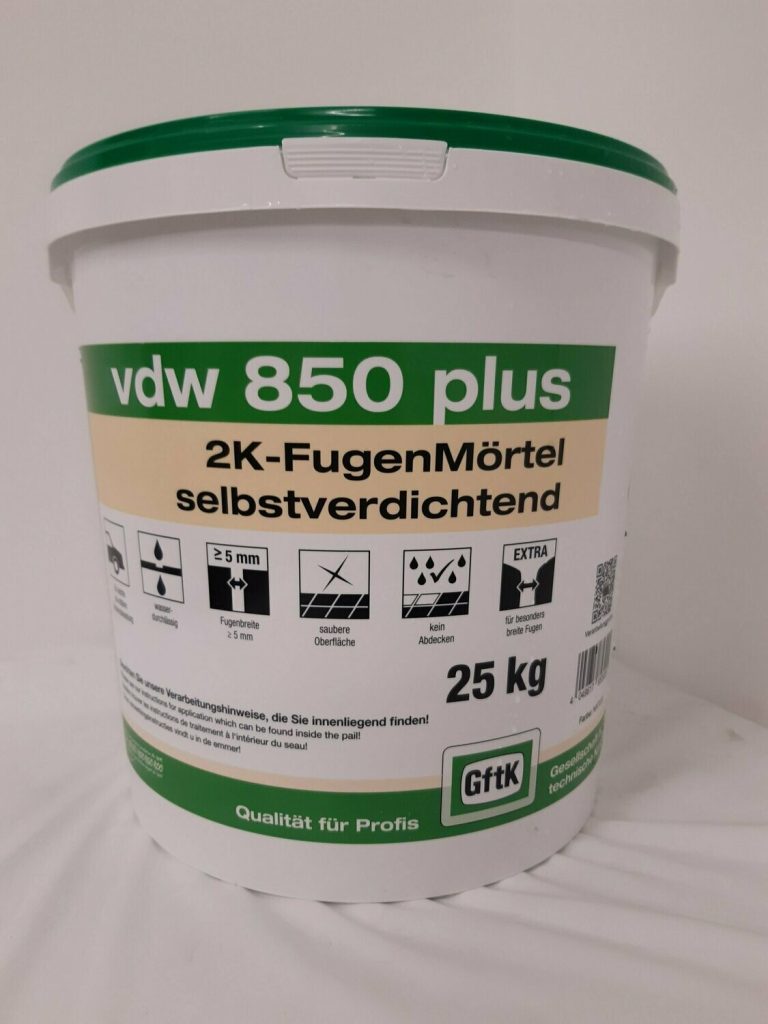
GftK vdw 850+ – Epoxy Jointing Grout for Natural Stone & Porcelain Paving
Price range: £114.58 through £118.83
How to choose the right one
Choosing the best grout for porcelain slabs comes down to three things. First, measure your joint width. Porcelain slabs usually have tight 3–5mm joints, which suits vdw 815+. Wider or irregular joints suit vdw 850+. Next, think about exposure and traffic.
Finally — and this is often the most important part — think about the site conditions and the weather forecast, both while you grout and for a few days afterwards. The worst case is the right product used in the wrong conditions: a failure waiting to happen, often within a year. Fortunately, GftK covers this for you, with minimal limitations on joint size, wet weather, or residual water in the joints.
How to apply it
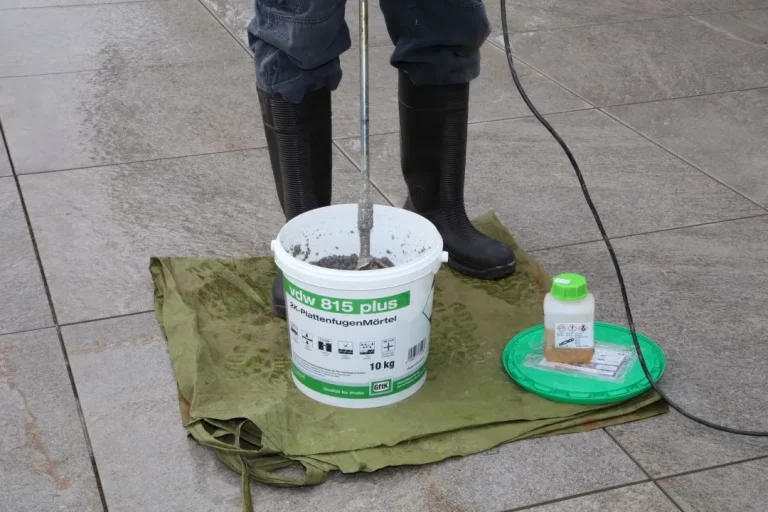
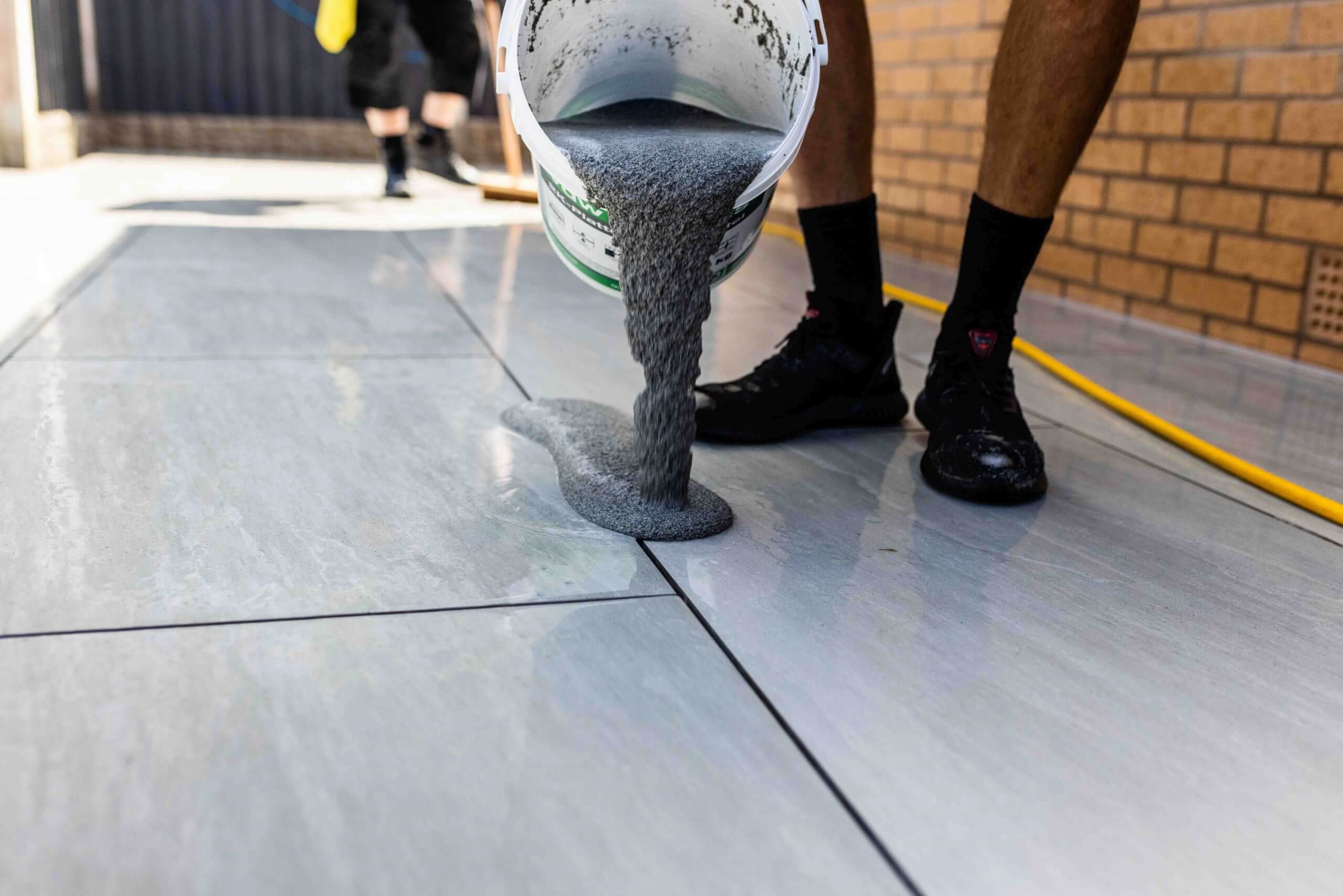
Applying the wet-slurry epoxy grout is straightforward once the slabs are pre-wetted to saturation and kept wet throughout. You mix the fully pre-batched product as shown — nothing to measure or add. Then pour the slurry onto the paving, and use a squeegee to move it across the surface so it self-compacts into the joints. Finally, rinse off the excess with more water. For the full process, see our step-by-step guides and videos.
Get free expert help
Still not sure which product suits your project? No problem. For advice on any aspect of your porcelain paving, call the NCC Streetscape experts for free technical support and fast UK delivery. Call 01257 266696 or email sales@nccstreetscape.co.uk. It often helps to attach a couple of photos of anything specific you’d like them to see.
FAQs
Which is the best grout for porcelain slabs?
The best grout for porcelain slabs is a 2nd-generation epoxy slurry grout — GftK vdw 815+ or GftK vdw 850+ , depending on joint width. It bonds tightly to the non-absorbent porcelain edges, won’t crack, and resists frost and frequent jet-washing.
What grout should I use for a porcelain driveway?
For porcelain on domestic driveways and parking areas — with a suitable structural build-up to carry the load — use GftK vdw 850+. It’s a top-performing epoxy grout rated for vehicular traffic. We also recommend joints of at least 5mm to handle the extra stresses.
Can you use normal cement grout on porcelain slabs?
You can, but we don’t recommend it. Cement grout shrinks, cracks and bonds poorly to non-absorbent porcelain, so it often fails within a few years. We’re regularly asked to advise on repointing porcelain patios that used cement or brush-in products — some after just a year. They’re cheaper per bag, but not if you have to repoint every couple of years. A 2-part, non-staining epoxy grout is a far better choice, and it can even be used in wet weather.
What is the best grout colour for porcelain paving?
All the GftK epoxy grout colours give the same durable performance, so the colour is really up to you. Some people like a contrast, others a close match — and note that grout and porcelain can never be matched exactly anyway. If it helps: Stone Grey (light grey) is the most popular for a clean, modern look, while Natural Sand (a light beige-brown) and Basalt (a very dark grey) also work well.
More reads from NCC
View all articles