Resin Jointing Compound That Lets You Keep Working in the Rain – With No Staining

As autumn turns to winter, the British weather starts to decide when you can finish paving jobs. Rain, cold mornings and water sitting in the joints stop most jointing products in their tracks. However, the right resin jointing compound changes that. In this guide, we explain why GftK vdw 850 plus lets you keep working through the wetter months. We also show how it avoids the two problems that worry buyers most: staining and cracking.
What is a resin jointing compound?
A resin jointing compound, also called a resin based jointing compound, resin paving grout or epoxy paving grout, uses resin rather than cement to bind sand into a mortar. It grouts and fills the joints between paving slabs, flags, setts and cobbles. The best, highest-performance and most durable are 2-part epoxy resin based paving joint mortars. These harden and set by chemical cross-linking, not by evaporation or cement hydration. As a result, they don’t shrink, crack or wash out like other pointing materials.
Why wet and cold weather stops most jointing
Most jointing products have strict weather limits for successful application on site. Sadly, these limits are not always made clear or properly observed. For example, cement-based mortars need relatively dry conditions and a dry forecast. They also often leave a cement haze on the paving. Many 1-part products also need warm, dry weather, so that enough evaporation takes place for them to harden properly. Some epoxy grouts cause problems too. Most epoxy resin jointing mortars can stain sensitive, permeable stone surfaces, and they leave an unsightly resin bloom in damp conditions. As a result, jobs stall, contractors wait to get paid, and owners wait to use their paving.
A resin jointing compound that lets you keep working, even in the rain
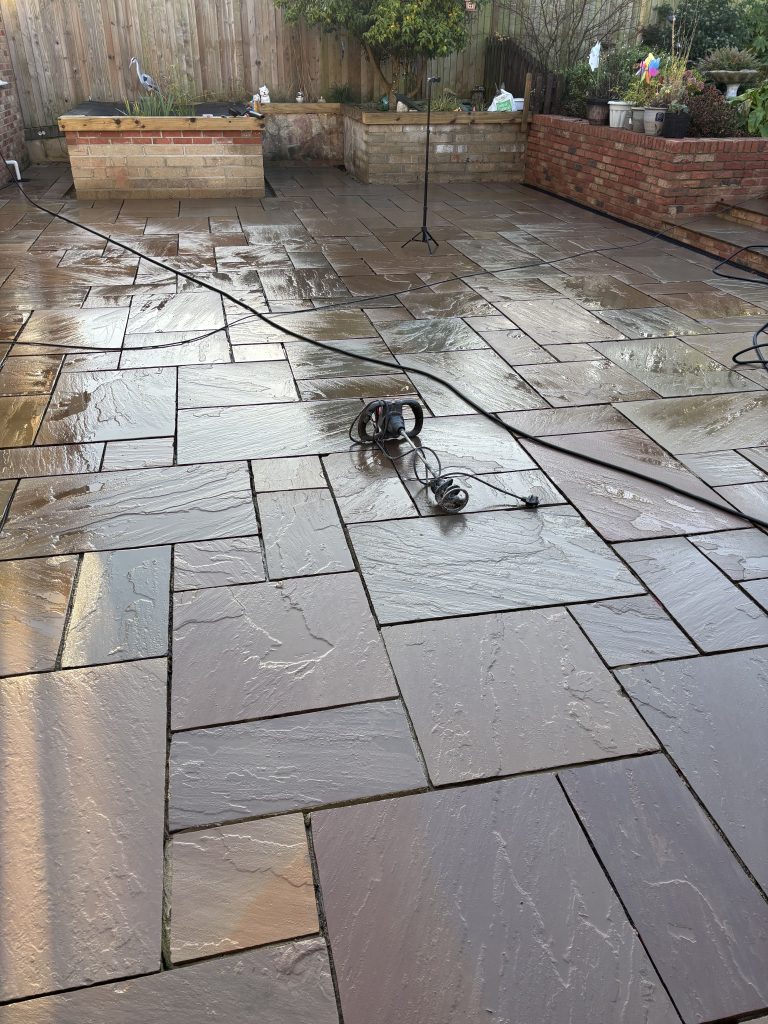
GftK vdw 850 plus is a 2nd-generation, 2-part epoxy resin jointing compound. GftK designed it so you can start and finish on schedule, whatever the forecast. In fact, you can even keep working in the rain when you need to finish.
It also hardens quickly at lower temperatures, from around 3°C on a rising thermometer. So you can plan your jointing and repointing works when you are ready, not only when the British weather cooperates.
The secret is its flow. GftK vdw 850 plus is highly cohesive. So it spreads easily across the paving and into the joints as a wet slurry. There, it displaces any residual water with highly efficient self-compaction. Therefore, water left in the joints is no concern. You also don’t need any extra tooling or finishing. As a bonus, there is also far less wasted material.
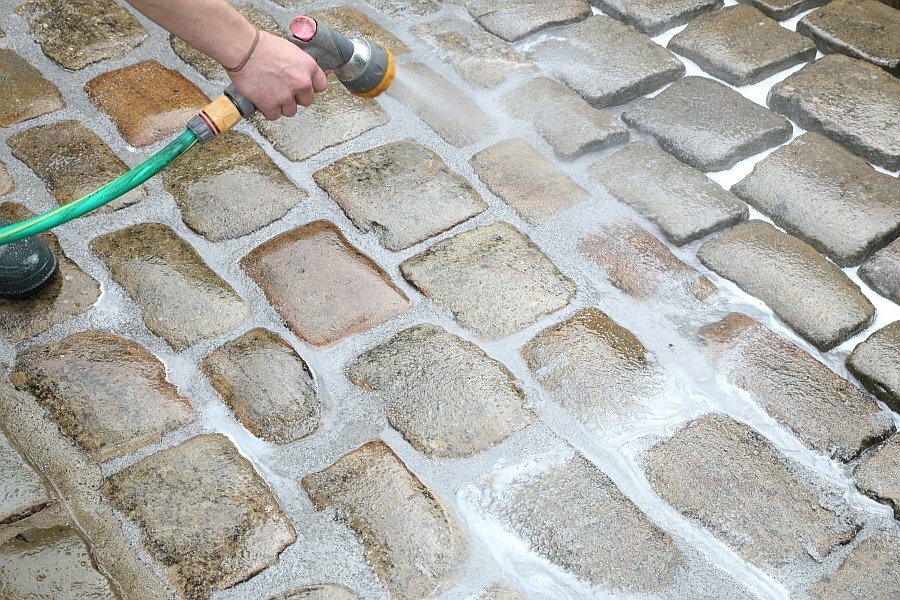
Finally, clean-up is simple. You just rinse and brush off any residue with a little more water from a fine hose spray.
- For contractors: no delays, no staining, paid on time.
- For owners: no delays, no staining, back in service on time.
Buy now
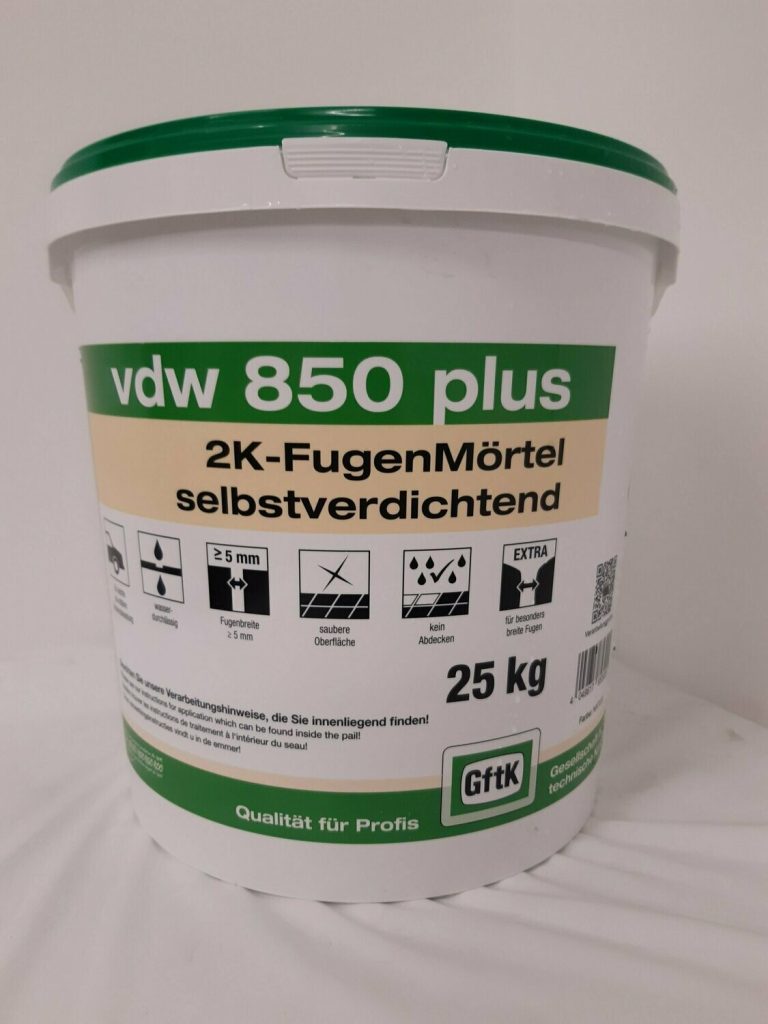
GftK vdw 850+ – Epoxy Jointing Grout for Natural Stone & Porcelain Paving
Price range: £114.58 through £118.83
A non-staining resin jointing compound, even on sensitive natural stone
Staining is the biggest worry with any resin jointing compound, because not all jointing resin behaves the same way. With many products, the resin separates from the sand during application. It then contaminates the paving, especially lighter, more permeable and sensitive natural stone. Some suppliers call this a “temporary sheen”. However, it still looks terrible. It also takes a lot of effort to clean, or a long time to weather off.
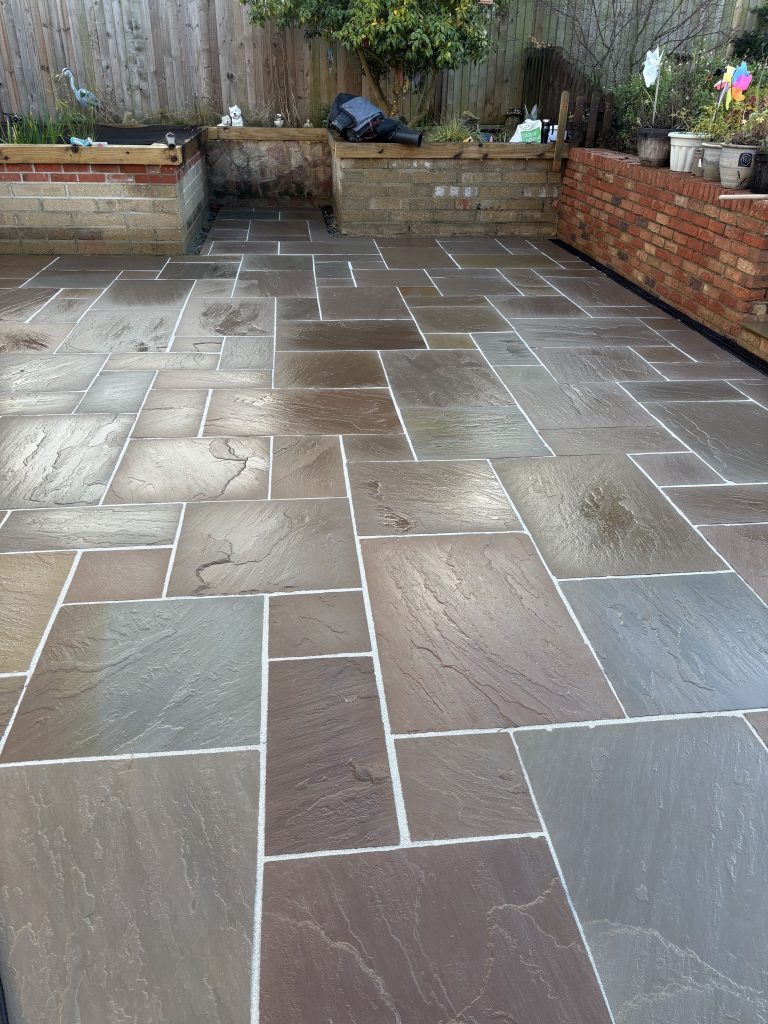
GftK takes a different approach. Its 2nd-generation, water-dispersed epoxy technology is exclusive to GftK in Germany. The resin precoats specially graded, spherical, alluvial glacial sands. Because of this high internal cohesion, the mix doesn’t separate or lose resin. That’s why, with GftK, it is “the wetter the better” at the wet-slurry stage. By contrast, that much water could cause separation and loss of performance with other epoxy jointing products.
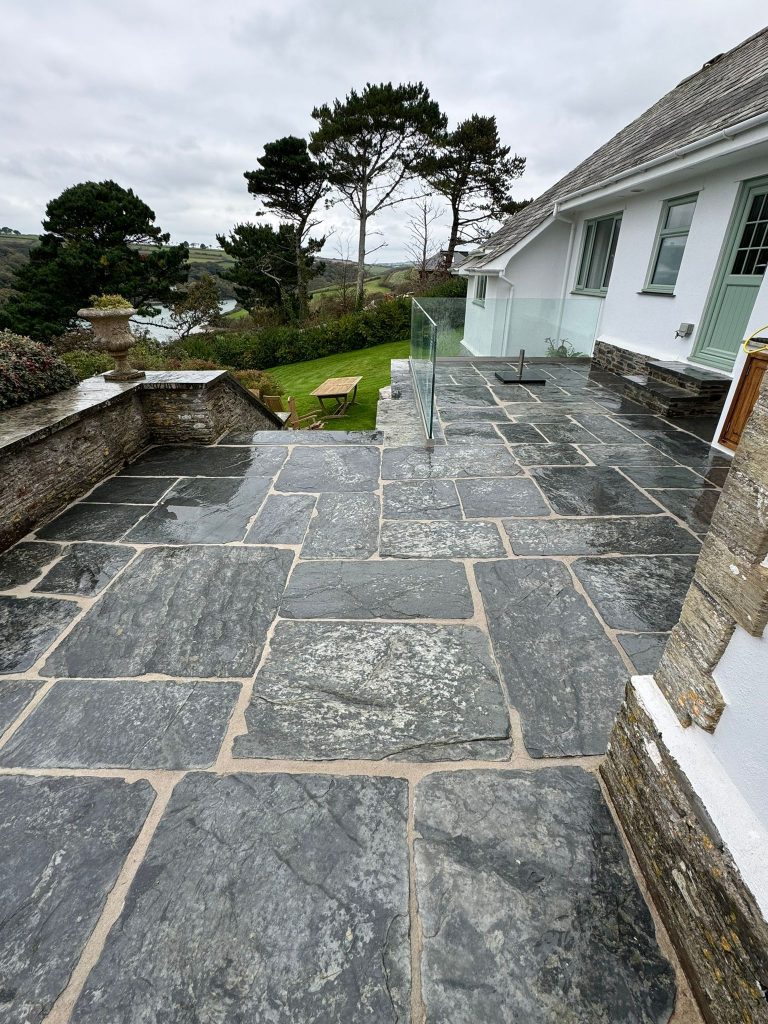
As a result, GftK vdw 850 plus stays non-staining even on relatively sensitive sandstone, limestone and granite paving. In addition, there is none of the annoying cement haze you get from cement-based jointing. That makes GftK vdw 850 plus a safe resin grout for Indian sandstone, where staining is the main worry. For more on stone choices, see our guide to the best grout for Indian sandstone.
Watch: Indian sandstone patio pointing with GftK vdw 850
No shrinkage cracking with this resin jointing compound
Cement mortars shrink as they harden through cement hydration, and this shrinkage causes cracking. In fact, shrinkage is the root cause of many joint failures. GftK vdw 850 plus is different, because it hardens by internal cross-linking. As a result, there is no short- or long-term shrinkage, and so no shrinkage cracking.
This also makes it well suited to joints with variable widths. For example, it works as a resin pointing compound for repointing traditional Yorkstone, historic slate slabs and granite setts without uniform joint sides. It also suits crazy paving, which is coming back into fashion.
How to apply this resin jointing compound in four simple steps
Applying GftK vdw 850 plus is straightforward, and you do most of it standing up:
- Pre-wet: saturate the paving with clean water and keep it wet throughout.
- Mix: mix the fully pre-batched product as shown. There is nothing to measure or add.
- Pour and wet-slurry apply: pour the mixed product onto the paving. Then use a squeegee and wet-slurry techniques across the surface. It flows easily into the joints and self-compacts.
- Rinse and brush off: finally, rinse off any surface residue with a little more water from a fine hose spray and a soft brush. No additional tooling or finishing is needed.
Watch: Grouting paving in wet weather with GftK vdw 850 plus
Tough enough for driveways, streets and market squares
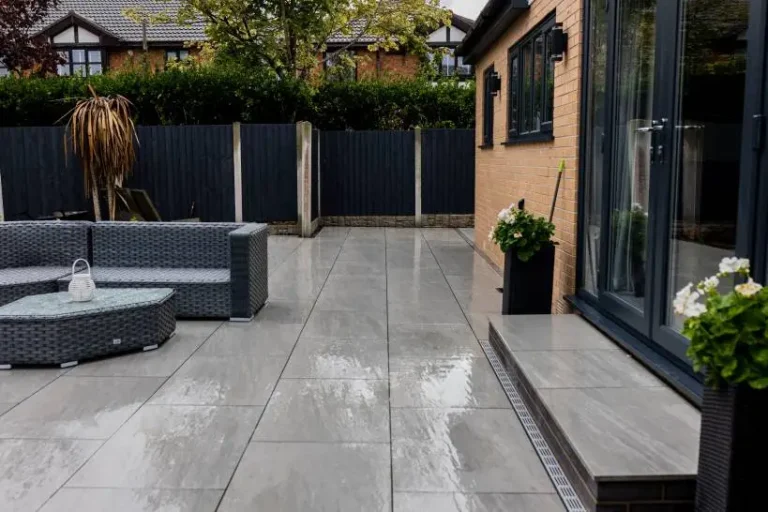
GftK vdw 850 plus suits all types of paving, from retail and commercial areas to domestic driveways. It also makes a hard-wearing resin patio grout for garden patios. In addition, it suits heavily trafficked paved roads and public spaces such as market squares. It takes pedestrian and vehicle traffic, including larger vehicles and HGVs. Moreover, it withstands frost, de-icing salts, high-pressure jet-washing and even mechanical street-cleaning machines.
It works in joints from 5mm wide and around 20mm deep. It also suits natural stone, reconstituted stone, concrete and ceramics, including external porcelain. For narrower joints from 3mm, use GftK’s finer-grade vdw 815 plus. It shares the same unique resin basis, so it gives you the same wet-weather advantages.
Resin jointing compound vs sand and cement
| Sand and cement | 1st-generation epoxy | GftK vdw 850 plus (2nd-generation epoxy) | |
|---|---|---|---|
| Rain or wet joints | Needs dry weather and a dry forecast | Risk of resin bloom in damp conditions | Keep working, even in the rain |
| Cold weather | Needs dry, mild conditions | Varies by product | Hardens quickly from around 3°C, rising |
| Staining | Cement haze | Resin sheen or staining on sensitive stone | Non-staining, even on sandstone, limestone and granite |
| Shrinkage cracking | Shrinks and cracks as it cures | Varies by product | No shrinkage; hardens by cross-linking |
| Tooling | Hand pointing, joint by joint | Often needs compacting | Self-compacting, no tooling or finishing |
| Jet-washing and traffic | Joints erode over time | Varies by product | Withstands jet-washing, street sweepers and HGVs |
Proven on UK streets since 2007
Professional civil engineering contractors have used GftK vdw 850 plus on major UK projects since 2007. We have regularly revisited some of the busiest schemes. The paving joints were still sound after years of traffic, heavy trucks and de-icing salts:
- Newark Market Square: still sound after more than 19 years
- Church Road, Hitchin: still sound after more than 16 years
- Norwich City Centre: still sound after more than 12 years
The linked reports are from our 2022 revisits. Landscape & Amenity also covered these results in State-of-the-art in urban paving re-pointing. You can also see it at work in the wet and the cold. For example, see granite sett paving jointed in winter and a beer garden jointed in wet weather.
Get the job done this winter
Does the weather look set against you? Or do you simply want fewer joint problems and comebacks? Either way, choose GftK vdw 850 plus for your next project. It is the non-staining resin jointing compound you can use in wet weather, even in the rain. You get fewer site and environmental limitations, no delays, and savings in time and money when it matters.
Buy GftK vdw 850 plus → Need advice on your project? Call NCC Streetscape on 01257 266696 or email sales@nccstreetscape.co.uk. A couple of photos always helps.
Frequently asked questions
Can you apply resin jointing compound in the rain?
With GftK vdw 850 plus, yes. You can keep working in the rain when you need to, for example to finish the pointing and complete the job. That’s because it displaces residual water from the joints as it self-compacts. However, beware: many other resin and cement-based products need dry conditions for application.
What is the lowest temperature for GftK vdw 850 plus?
It continues to harden at lower temperatures, from around 3°C on a rising thermometer.
Is resin grout any good?
A good resin paving grout is an excellent choice. However, site limitations, performance and durability vary a lot between products. For example, 2nd-generation epoxy mortars such as GftK vdw 850 plus don’t shrink or crack, stay non-staining and withstand jet-washing. By contrast, cheaper resin products can separate and stain the paving, or even wash out under jet-washing.
Is resin jointing compound better than sand and cement?
Yes. Sand and cement needs dry weather for application. It can also leave cement haze and efflorescence. In addition, like all cement mortar, it shrinks as it cures, which leads to cracking. This is especially likely if residual water or rainfall upsets the water-to-cement ratio during installation and early hardening. By contrast, GftK vdw 850 plus can go down in the rain, stays non-staining and doesn’t shrink.
Can I use GftK vdw 850 plus as a resin patio grout?
Yes. It suits domestic patios perfectly, as well as driveways and public paving, in joints from 5mm wide. For narrower joints from 3mm, use GftK vdw 815 plus.
Is resin stronger than mortar?
A good 2-part epoxy resin mortar is far more durable in the joints than sand and cement. However, it is not just a question of a “headline” compressive strength. What matters is the right, optimised correlation of compressive strength, tensile strength and e-modulus. For instance, this is why GftK vdw 850 plus withstands frequent, heavy traffic including HGVs, jet-washing and even mechanical street sweepers. It has also stayed sound in UK highways and market squares for nearly two decades.
Will GftK vdw 850 plus stain my sandstone?
No. With many “resin” and epoxy grout products, the resin binder separates and migrates into the sandstone surface. By contrast, GftK vdw 850 plus uses a 2nd-generation, water-dispersed epoxy resin precoated on graded sands. So it stays non-staining, even on relatively sensitive sandstone, limestone and granite paving.
Will the joints crack?
No. GftK vdw 850 plus hardens by internal cross-linking, so there is none of the short- or long-term shrinkage cracking you get with cement-based paving grout. That’s also why it suits variable-width joints in Yorkstone, historic slate, granite setts and crazy paving.
Can I jet-wash GftK vdw 850 plus joints?
Yes. Once hardened, this resin jointing compound withstands high-pressure jet-washing and even mechanical street-cleaning machines.
Related guides
More reads from NCC
View all articles