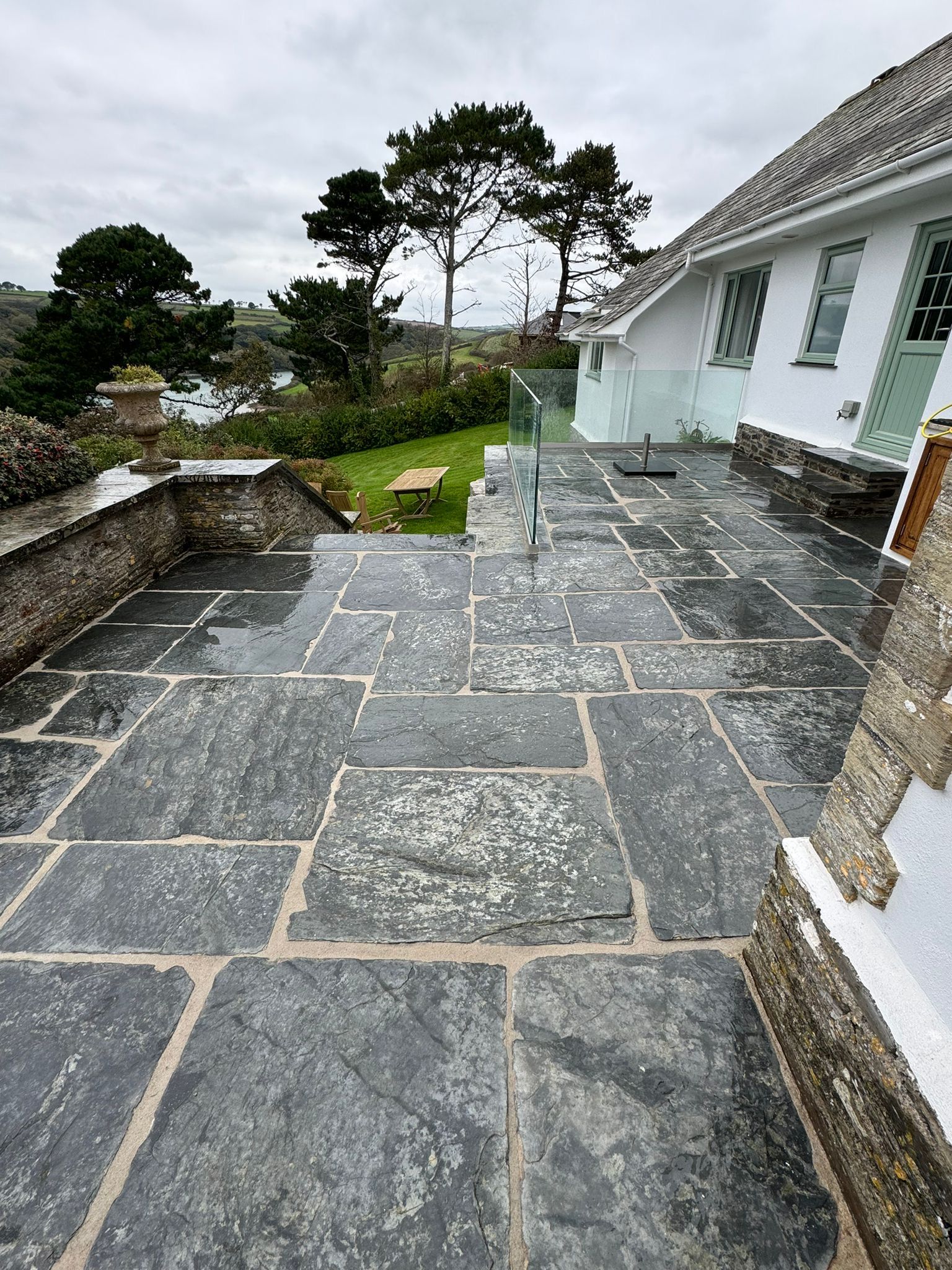
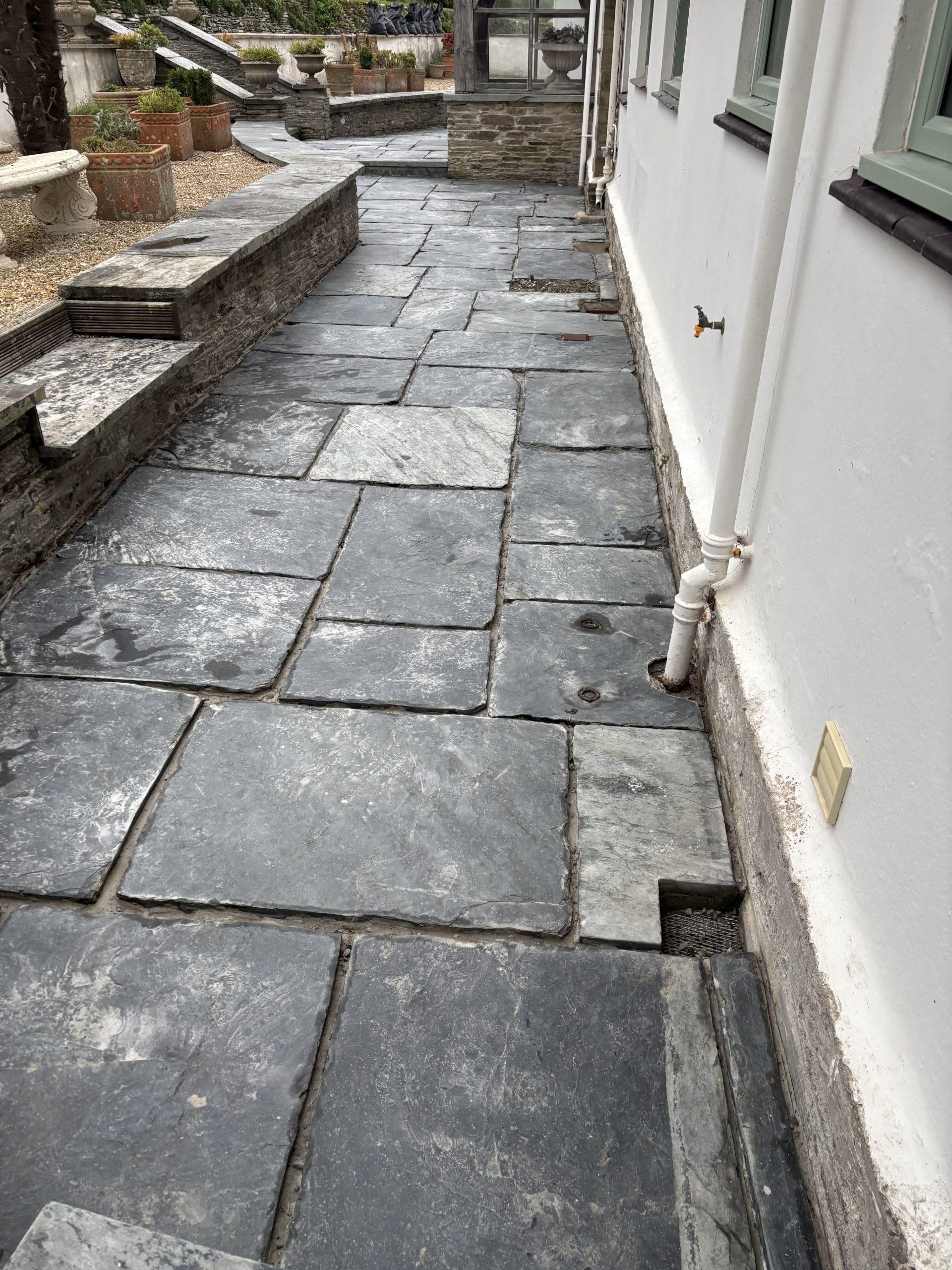
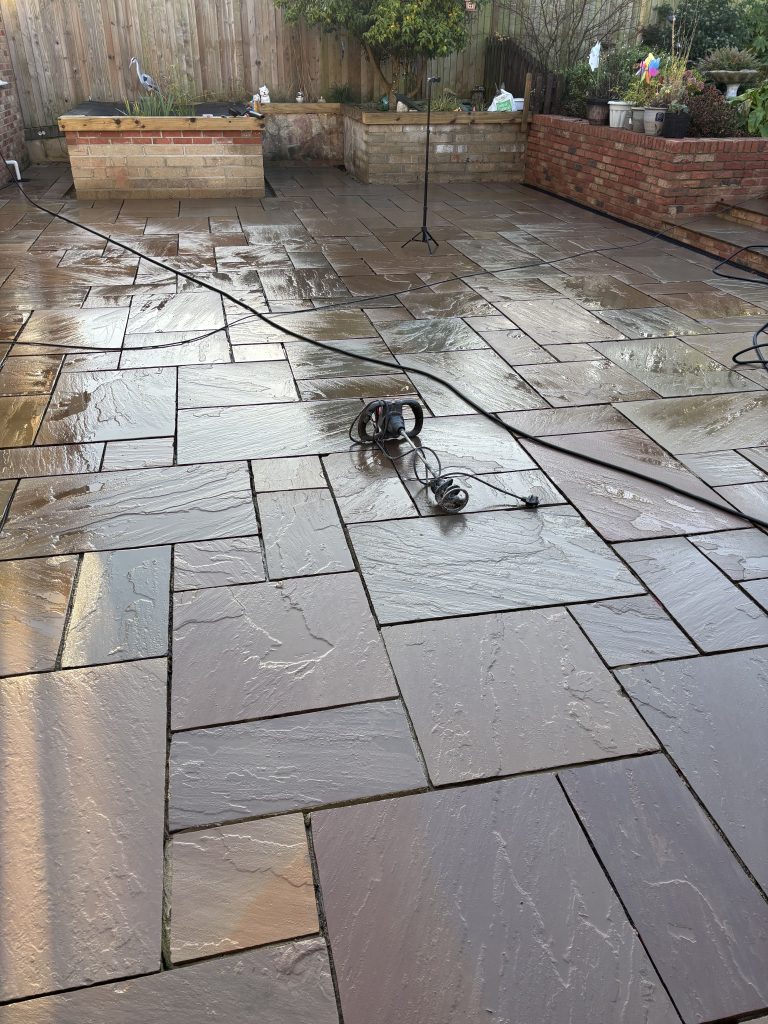
This prestige holiday home in South Devon, underwent a major refurbishment in 2018, including repointing of the extensive random-sized natural slate paving with cement-based pointing. Unfortunately, this soon cracked and needed more repairs and repointing almost every year. The extent of this cracking and breaking up by mid-summer 2025, was such that the owners felt it was not only becoming unsightly, but also unsafe and a trip hazard for their guests. They asked Gorah Stone, the stone restoration specialist, to try and find a more durable and permanent solution. Additionally, the now urgent repointing works had to be completed with a high risk of wet weather in this exposed coastal location. All these criteria and requirements combined to present critical issues for selecting the repointing material:
• Firstly, the joints were extremely varied in both width and depth, plus for most of the joint lengths, the joint arrises (edges / sides) were also very varied, and not parallel. Joint dimensions of this nature have a very high risk of failure, especially for cement-based mortars, which is due to the high levels of differential shrinkage stresses created during the cement hydration and hardening process. These lead to shrinkage cracking, as well as stress cracking from thermal movement in service.
• Secondly, the repointing had to be completed quickly for new guests arriving and wet weather conditions were almost inevitable at some point. However, all traditional and modern cement-based jointing materials must be applied in dry conditions with no residual water in the joints, and then then allowed time to cure and harden before exposure to rainfall, or water run-off, otherwise, shrinkage cracking and premature failure is inevitable.
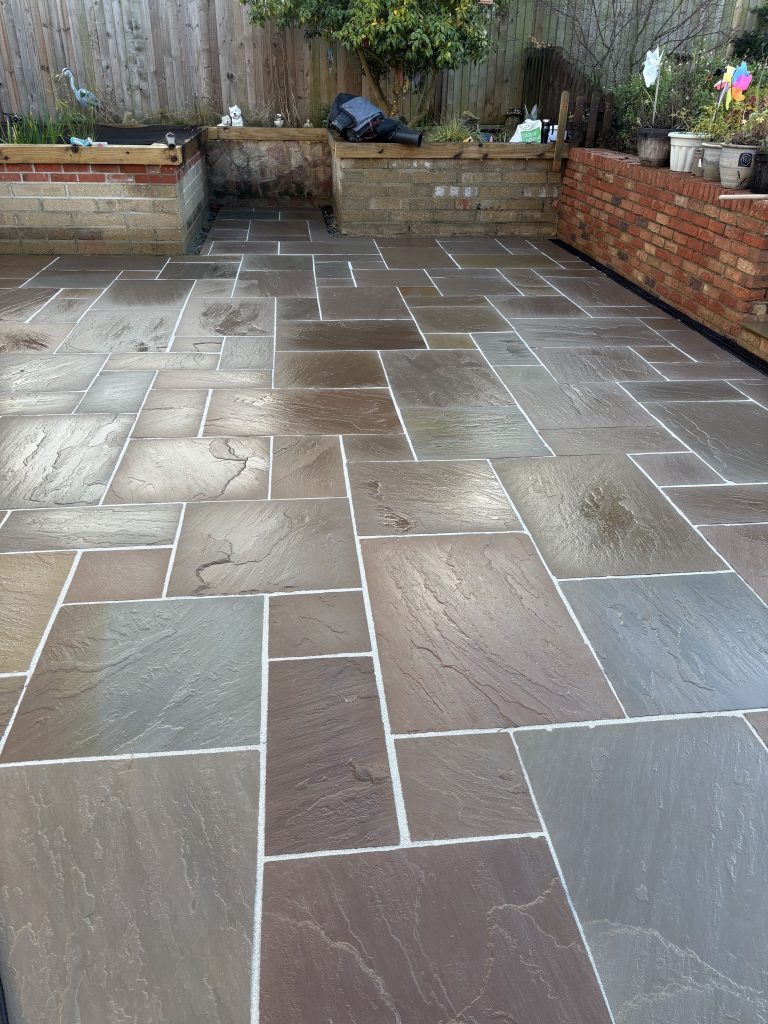
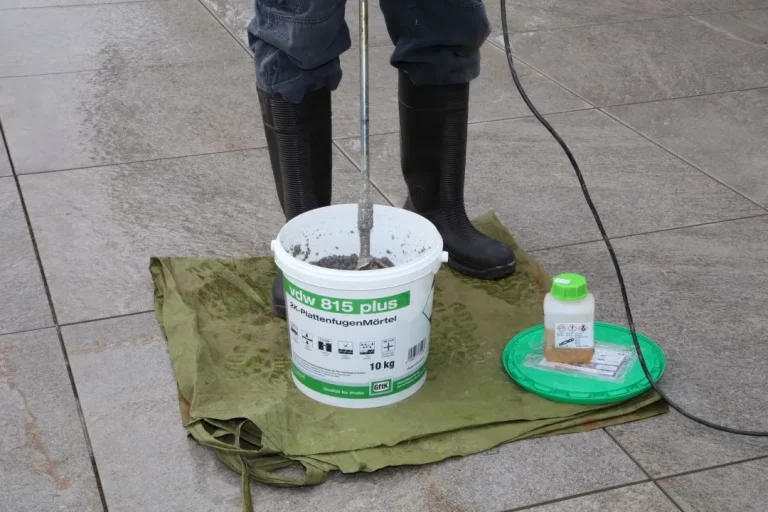
Gorah Stone contacted NCC Streetscape, leading UK paving jointing specialists, for their expert advice and fortunately, they had an answer. This was to use GftK vdw 850 plus, a unique, 2nd-generation, epoxy jointing mortar, which is reaction hardening, with no physical shrinkage, meaning no shrinkage cracking and variable joint dimensions are no problem. There are no worries about residual water in the joints, and no delays due to wet weather, even in the rain, and is the only truly wet-weather paving jointing – effectively the ‘State-of-the-Art’ in paving jointing & repointing technology.
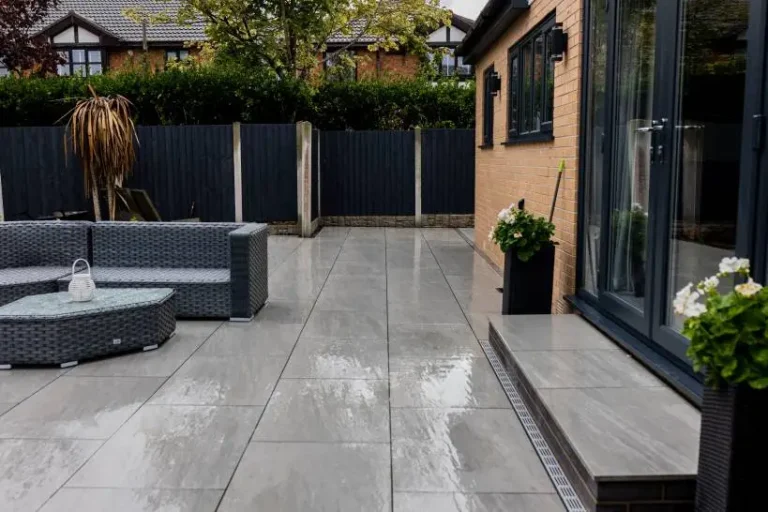
GftK vdw 850 plus is very easy to apply using modern wet-slurry techniques, as it has very high flow properties and self-compacts into the joints, so there is also no additional tooling or finishing required. Unlike cement and other resin-based jointing materials, GftK vdw 850 plus is non-staining, and there is no cement haze & no efflorescence to clean-off, so no waiting to clean, or going back to clean when the surfaces dry out. It is fast curing & hardening, to a tough and durable material that resists heavy pedestrian traffic, as well as frequent vehicular traffic for driveways and public areas. It is fully resistant to de-icing salts in winter, and very importantly, to frequent cleaning by high pressure jet-washing and even mechanical street cleaning machines.
NCC Streetscape’s Technical Services Manager also arranged to support Gorah Stone on site for this prestige and complex project for their first use of GftK vdw 850 plus. The team were able to quickly and efficiently complete all the necessary preparation and repointing works as scheduled and on time, despite the weather. All these advantages add-up to a huge benefit, allowing owners and their contractors to get paving works completed, get the areas open, and get them back into service, all on time, and as scheduled – and get paid! By using GftK vdw 850 plus, your paving is going to be good for many more years, so it is also the sustainable choice: “Get the Best” with GftK vdw 850plus.